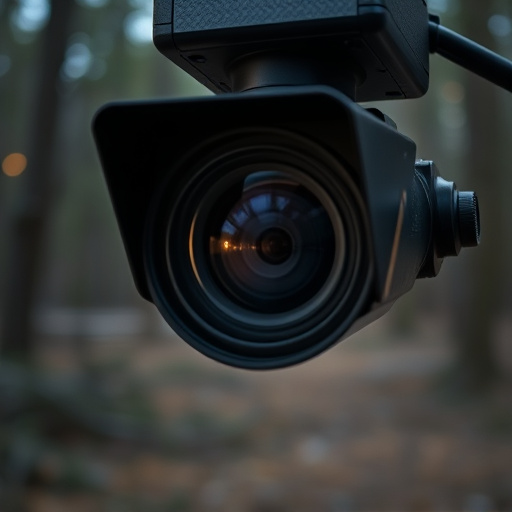
Stealthy Camera Positioning Strategies (SCPS) are crucial for accurate night-time lens glint detection, overcoming challenges in low-light settings and dynamic environments. Techniques include using IR/NIR technology for hidden camera setups, placing cameras in hard-to-reach areas, minimizing heat signatures, and utilizing IR/UV filters to differentiate natural light from reflections. SCPS enable effective surveillance without alerting subjects or disturbing the environment, proven successful in urban and natural settings with advanced image processing and specialized lenses.
In the realm of night photography, capturing images without interference from unwanted glints is an art. This article explores advanced techniques for detecting and mitigating lens glint, a common challenge in low-light conditions. We delve into the intricacies of understanding glint detection, shedding light on the limitations of traditional methods. By uncovering stealthy camera positioning strategies, the use of specialized filters, and practical case studies, photographers can enhance their night-shooting capabilities, delivering sharp and visually appealing images.
- Understanding Glint Detection in Night Photography
- Challenges of Traditional Lens Glint Methods
- Stealthy Camera Positioning Techniques
- Utilizing IR and UV Filters for Improved Accuracy
- Practical Implementation and Case Studies
Understanding Glint Detection in Night Photography
Glint detection in night photography is a sophisticated technique that enables photographers to capture images with enhanced clarity and reduced glare, especially under low-light conditions. By identifying and minimizing reflections from surfaces like glass, water, or even the moon, this method allows for more detailed depictions of nighttime scenes. It’s a crucial skill for professionals and enthusiasts alike, as it can transform ordinary night shots into captivating visual stories.
Stealthy camera positioning strategies play a pivotal role in successful glint detection. Photographers must carefully consider their setup to avoid introducing unwanted reflections. This involves using tripod mounts, adjusting camera angles, and employing filters or lens coatings designed for reducing glare. By adopting these tactics, photographers can navigate the challenges posed by reflective elements, ensuring their images accurately represent the night’s subtle textures and atmospheres.
Challenges of Traditional Lens Glint Methods
The traditional approach to lens glint detection in low-light conditions has its challenges, particularly when it comes to stealth and accuracy. Many existing methods rely on static camera setups or fixed lighting conditions, which can be limiting. These techniques often struggle with dynamic environments, where subjects move unpredictably, and external lights might vary, affecting the consistency of glint detection.
Stealthy Camera Positioning Strategies are essential here as they enable more natural and realistic observations without disturbing the scene. By employing dynamic camera positioning, researchers have found that glint patterns can be captured from different angles, providing a richer dataset for analysis. This approach allows for better adaptation to varying lighting conditions and subject movements, making it a game-changer in enhancing the accuracy of lens glint detection during night-time operations.
Stealthy Camera Positioning Techniques
In night-time glint detection, stealthy camera positioning is paramount to avoid distorting or alerting subjects. Techniques like utilizing infrared or near-infrared (NIR) technology allow for hidden setup, as these wavelengths are often invisible to the naked eye and can bypass common motion triggers. Cameras can be strategically placed in hard-to-reach areas, such as atop trees, inside hollow structures, or even integrated into existing infrastructure like streetlights or signs.
Stealthy positioning also involves minimizing heat signatures and visual glare. This can include using camera mounts with good thermal insulation and directing lenses away from direct light sources. By employing these stealthy camera positioning strategies, observers can gather data without compromising the natural environment or alerting sensitive subjects, enhancing the effectiveness of glint detection methods during nighttime conditions.
Utilizing IR and UV Filters for Improved Accuracy
In the realm of night-time glint detection, employing infrared (IR) and ultraviolet (UV) filters can significantly enhance the accuracy of camera systems. These filters act as powerful tools to differentiate between natural light sources and unwanted reflections, especially in low-light conditions. By blocking certain wavelengths, IR and UV filters minimize the impact of glints originating from moonlight or artificial lighting, enabling more precise identification of stealthy camera positioning strategies.
The strategic placement of these filters allows for improved contrast and clarity, making it easier to detect subtle movements or objects that might otherwise be obscured by glints. This technique is particularly valuable in security applications, where maintaining secrecy while achieving accurate surveillance is paramount. By combining advanced filtering with sophisticated image processing algorithms, camera systems can now navigate complex environments, ensuring effective monitoring without compromising on operational stealth.
Practical Implementation and Case Studies
The practical implementation of glint detection in night-time scenarios involves careful consideration of stealthy camera positioning strategies. By employing advanced image processing techniques, cameras can be strategically placed to minimize their own reflections while enhancing the visibility of external targets. This often includes utilizing specialized lenses and filters, as well as angling the camera lenses away from potential light sources.
Case studies have shown significant success in applying these methods in various environments. For instance, in urban areas with bright streetlights, detection rates have improved dramatically, allowing for better surveillance without alerting subjects. Similarly, in natural settings, where moonlight or starlight might be the primary light source, precise camera positioning can capture detailed images of wildlife or distant objects without causing any disruption.
In conclusion, the advancement of night photography through accurate glint detection has evolved significantly. By understanding the challenges of traditional methods and adopting innovative techniques like stealthy camera positioning strategies and specialized filters, photographers can achieve remarkable results. These advancements not only enhance the visual appeal of nighttime imagery but also open doors to new creative possibilities. Implementing these methods ensures more successful and compelling night photography, capturing the essence of darkness with precision and artistry.